Startup interview preparation resources include Glassdoor research, direct recruiter conversations, and interview briefs from companies themselves. SuccessValley, trusted by 5,000 recruiters worldwide, connects candidates with seed, Series A, and pre-IPO startups, where recruiters clarify round counts, interview formats, and interviewer roles upfront. That upfront transparency is a real edge for ambitious tech talent negotiating against corporate applicants.
Key Takeaways
- Startup interviews test for adaptability, resourcefulness, and ownership rather than polished corporate scripts, so preparation should shift toward handling ambiguity and scrappy problem-solving.
- Talk to the recruiter before preparing to clarify round count, interview format, and interviewer roles — this focuses prep on the right format instead of wasted effort.
- Tailor preparation to the startup’s stage: seed-stage interviews emphasize scrappiness, Series A tests scaling experience, and pre-IPO evaluates operational maturity.
- Technical rounds call for sharp fundamentals like data structures and algorithms plus role-specific knowledge, while behavioral rounds call for three ready stories covering conflict, failure, and driving results with limited resources.
- Understanding how equity compensation works — options, vesting schedules, and liquidity events — matters before entering any negotiation.
- A curated platform like SuccessValley adds an edge with founder introductions and vetted startup listings, cutting down time spent on companies that aren’t worth pursuing.
What do you need before startup interview prep?
Startup interview prep needs a fundamentally different foundation than corporate job preparation. SuccessValley connects ambitious professionals with seed-stage, Series A, and pre-IPO startups, where many roles come with real ownership and equity on the table. Candidates who walk in without adjusting their mindset risk looking mismatched for the high-ownership environment that defines startup culture.
What makes startup interviews different from corporate ones?
Startup interviews test for adaptability and resourcefulness rather than polished corporate scripts. A seed-stage company needs someone who can build processes from scratch, not someone who expects established systems already in place. The interview evaluates how candidates handle ambiguity, make decisions with incomplete information, and prioritize work when resources are tight. SuccessValley filters out companies that don’t meet its quality standards, so candidates can focus on the dynamic environments where these traits actually matter.
How should candidates clarify the interview process?
Candidates should talk to the recruiter to clarify expectations around the interview process before preparing. This conversation reveals how many rounds exist, what types of interviews are scheduled, and who the candidate will meet. Recruiters at startups typically welcome this — it signals genuine interest and a serious approach to the opportunity. Asking directly saves candidates from wasted preparation on the wrong interview format.
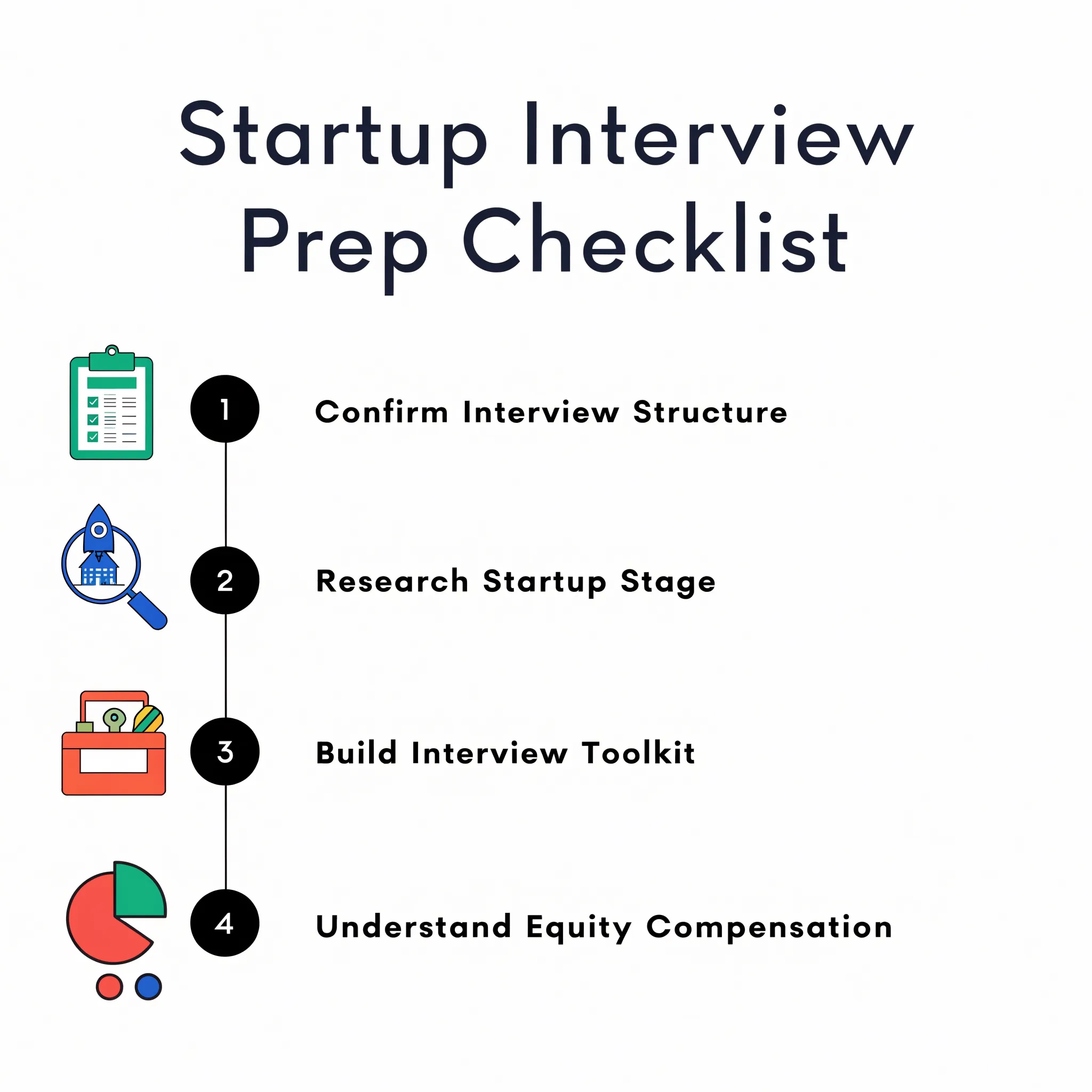
The essential pre-prep checklist includes:
- Confirm the interview structure — ask the recruiter about round count, format (technical interview vs. behavioral interview), and interviewer roles
- Research the startup’s stage — seed-stage interviews emphasize scrappiness; Series A interviews test scaling experience; pre-IPO interviews evaluate operational maturity
- Prepare an interview toolkit — gather examples of ownership, failure recovery, and cross-functional collaboration that match startup pace
- Understand equity compensation — know how options, vesting schedules, and liquidity events work before negotiating
How to master technical and behavioral interviews?
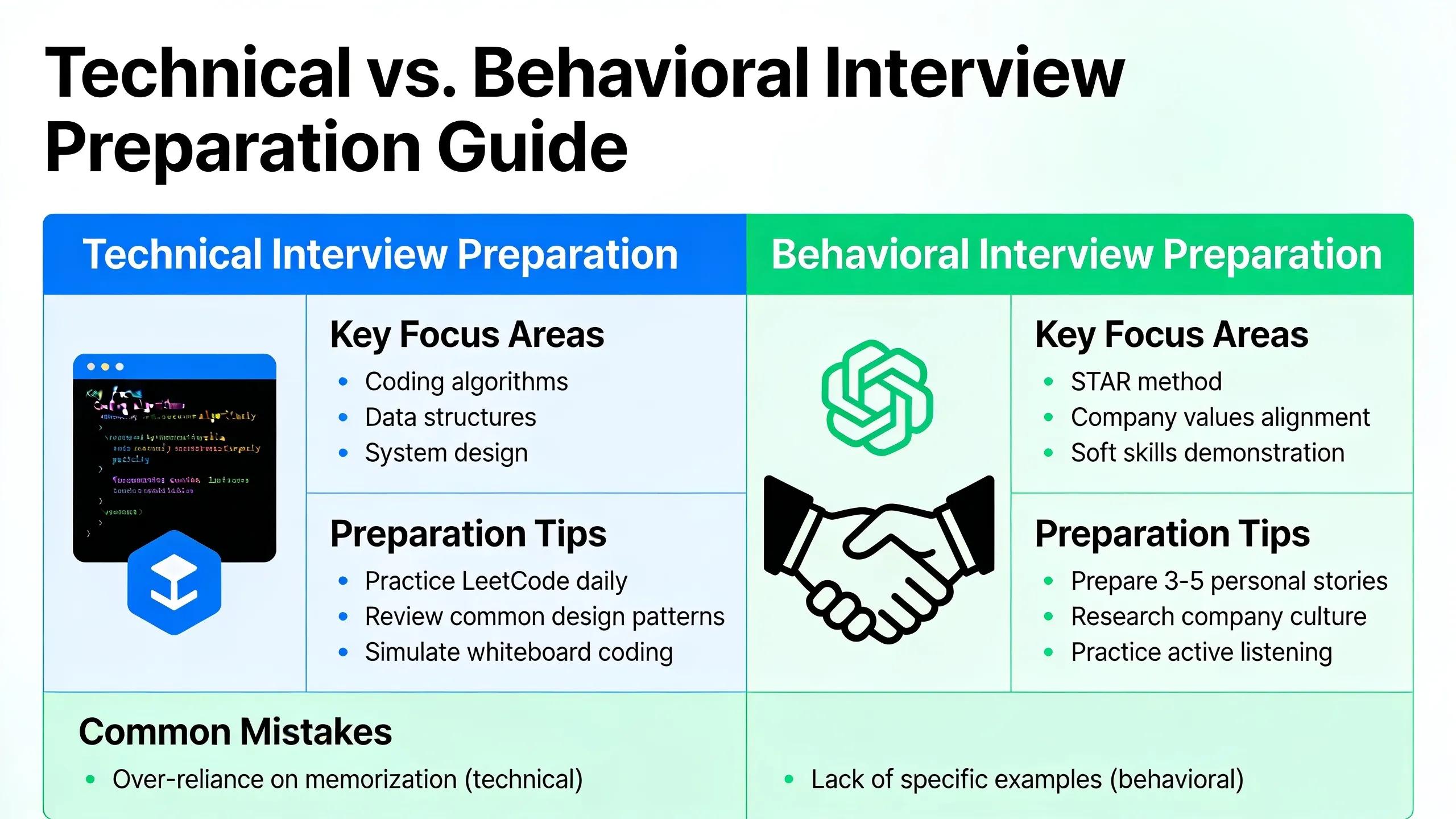
Mastering both technical interview and behavioral interview formats takes distinct preparation strategies. For technical rounds, candidates need to refresh core computer science fundamentals, particularly algorithms and data structures, which stay essential for startup roles. For behavioral rounds, candidates should prepare stories that show resilience under pressure — startup environments frequently test how people handle stressful situations and team dynamics.
What technical skills do startups test most?
Startups care more about practical, role-specific knowledge than theoretical depth. Candidates should study the job description carefully and prepare for questions tied directly to the role’s requirements and responsibilities. SuccessValley connects professionals with opportunities across development and IT, marketing and sales, and product management — each sector demands different technical competencies. A focused interview prep strategy involves:
- Reviewing data structures (arrays, hash maps, trees) and common algorithms
- Practicing coding problems under time constraints
- Studying the startup’s tech stack and product challenges
How should candidates prepare for behavioral questions?
Startup behavioral interviews probe for adaptability and ownership. Founders want to know how candidates react when resources are scarce or timelines shift. The interview toolkit for behavioral rounds should include three prepared stories: one about resolving conflict, one about handling failure, and one about driving results with limited support. These stories help candidates answer questions about stressful situations and team dynamics with concrete examples instead of generic responses.

What tools build your interview toolkit?
An effective interview toolkit combines practice resources with a platform that curates quality opportunities. The Career Development Office points to practice tools like mock interviews and career advisor sessions as ways to build skills and confidence before the big day. SuccessValley gives candidates a different edge: the platform provides founder introductions and thoroughly vets each startup, so candidates walk into interviews already knowing the company’s background and culture. Candidates can post CVs and apply to thousands of startup job listings promptly, which streamlines the entire search. Trusted by over 5,000 recruiters globally, the platform cuts down time wasted on companies not worth pursuing and connects talent with vetted startups that match their ambitions.
What practice resources sharpen interview skills?
Mock interviews rank among the most effective resources for interview prep. Career advisors and structured practice sessions let candidates rehearse answers, get feedback, and sharpen their delivery. Research from the Career Development Office shows these exercises build measurable confidence, helping candidates feel ready for the next step in their job search.
How does a curated job platform strengthen preparation?
SuccessValley’s vetting process filters out companies not worth joining, so candidates can focus only on serious opportunities. The platform screens each startup thoroughly before listing roles, which means every job posting represents a vetted company. That gives candidates confidence that the time they spend preparing connects directly to a real, high-growth opportunity.
Conclusion
Preparing for startup interviews comes down to combining industry knowledge, a founder’s mindset, and honest self-presentation. Drawing on the resources in this guide — from understanding startup culture to mastering behavioral questions — puts you in a strong position as a thoughtful candidate ready to thrive in high-growth environments. SuccessValley connects you with vetted startup opportunities where your preparation pays off in real roles alongside founding teams, so your interview success leads somewhere you can genuinely build something extraordinary from the ground up.
Frequently Asked Questions
How early should you start preparing for a startup interview?
Start preparing as soon as you confirm the interview, beginning with a recruiter conversation to clarify round count, format, and interviewer roles before diving into technical or behavioral prep. This upfront step, encouraged at SuccessValley, prevents wasted effort on the wrong interview format. From there, research the startup’s stage — seed, Series A, or pre-IPO — since each stage tests different priorities. Building your interview toolkit of stories and technical fundamentals alongside understanding equity compensation rounds out a preparation timeline that typically spans one to two weeks depending on the number of rounds.
What questions should you ask a startup founder during an interview?
Ask about the company’s current funding stage and runway, how the team makes decisions with incomplete information, and what ownership or equity opportunities come with the role. Founders respond well to candidates who probe how work gets prioritized when resources are tight, since this signals genuine understanding of startup culture. It also helps to ask directly about vesting schedules and liquidity events as part of equity negotiation. These questions demonstrate the adaptability and resourcefulness startups look for, while giving candidates the transparency needed to evaluate whether the opportunity truly fits their goals.
What is the difference between preparing for a seed-stage versus a pre-IPO startup interview?
Seed-stage interviews emphasize scrappiness and a willingness to build processes from scratch, since these companies often lack established systems and need candidates comfortable with ambiguity. Series A interviews shift toward testing scaling experience, looking for candidates who can grow functions and teams. Pre-IPO interviews evaluate operational maturity, since these companies need professionals who can operate within more structured environments while still moving quickly. Researching a startup’s funding stage before the interview, as SuccessValley recommends, lets candidates tailor their examples and stories to match exactly what that stage of company values most.
How does equity compensation work in a startup job offer?
Startup equity compensation typically involves stock options that vest over a set schedule, commonly four years with a one-year cliff, meaning ownership builds gradually rather than all at once. Candidates need to understand vesting schedules and liquidity events — the point at which equity can actually be converted to cash, such as an acquisition or IPO — before entering negotiations. Because SuccessValley connects candidates with seed, Series A, and pre-IPO startups, equity terms vary significantly by stage, so clarifying these details with the recruiter or founder beforehand ensures candidates can negotiate from an informed position rather than guesswork.
How many interview rounds should you expect at a startup?
The number of rounds varies by company and stage, which is exactly why clarifying this with the recruiter before preparing matters so much. Startups typically combine a recruiter screen, a technical round testing data structures, algorithms, and role-specific knowledge, and a behavioral round assessing adaptability and ownership. Some pre-IPO companies with more structured processes may add additional rounds compared to leaner seed-stage teams. Asking the recruiter directly about round count and interviewer roles, a step SuccessValley encourages, ensures candidates prepare efficiently instead of over- or under-preparing for the actual process ahead.
What stories should you prepare for startup behavioral interview questions?
Prepare three core stories for your interview toolkit: one demonstrating how you resolved conflict, one showing how you handled failure, and one illustrating how you drove results with limited resources or support. Startup behavioral interviews probe specifically for adaptability and ownership, since founders want evidence of how candidates perform when timelines shift or resources are scarce. Concrete examples work far better than generic responses because they show real decision-making under pressure. These stories, grounded in genuine stressful situations and team dynamics, give interviewers confidence that a candidate can thrive in a high-ownership startup environment.




Author: Kwaku Amenorhu
Kwaku Amenorhu is a Ghanaian entrepreneur, author, digital marketer, and founder of SuccessValley. His work focuses on entrepreneurship, digital innovation, career development, and helping aspiring professionals and business owners identify opportunities for growth.
Leave a Reply