
Before you even see an offer, the groundwork for a good negotiation is already being laid. SuccessValley puts candidates directly in touch with founders at seed-stage, Series A, and pre-IPO companies, vetting each one and pushing for equitable compensation — backed by a network of more than 5,000 trusted recruiters — so professionals can walk into salary and equity conversations with real confidence.
Getting startup pay right means looking at base salary, equity percentage, vesting schedule, and strike price together, not as separate line items. That’s the standard SuccessValley holds its startup partners to, so candidates can negotiate from a position of clarity rather than guesswork.
Key Takeaways
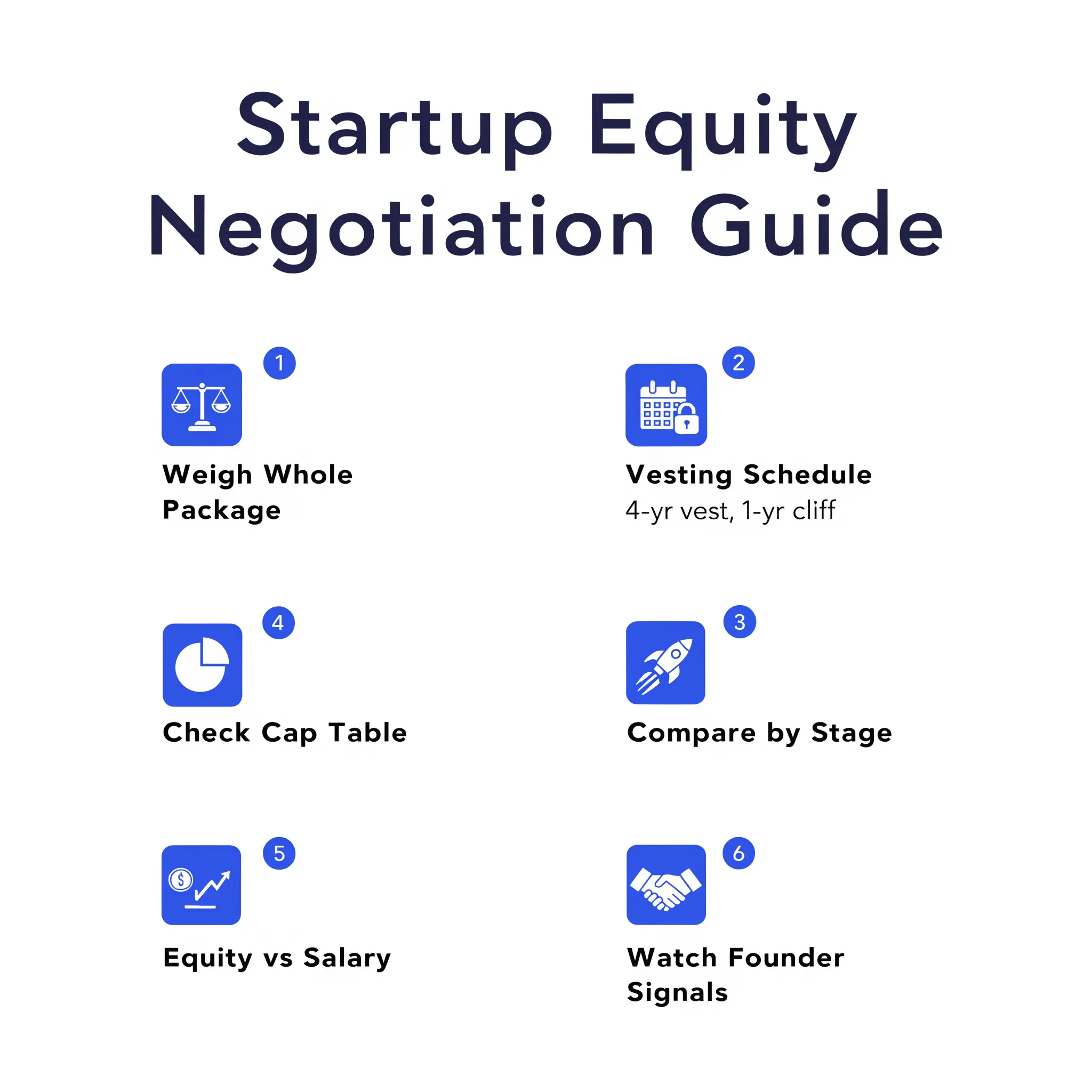
- Evaluate startup offers as a whole package — base salary, equity percentage, vesting schedule, and strike price together, not as separate numbers.
- The vesting schedule matters more than the raw share count: confirm the standard four-year vest with a one-year cliff, plus acceleration terms, in writing before accepting.
- How a founder handles a counteroffer previews how the company operates — transparent, fast responses signal a culture worth joining.
- Equity value depends on company stage: seed-stage grants are larger but riskier, Series A offers more balanced packages, and pre-IPO equity is smaller but closer to liquidity.
- Before negotiating equity, ask for the cap table, option pool size, fully diluted share count, and strike price to understand real dilution and cost.
- Weigh guaranteed cash against equity upside deliberately — equity can outperform a higher salary, but it’s worth nothing if the startup doesn’t succeed.
How do you negotiate equity in a startup offer?
Negotiating at a startup isn’t like negotiating at a big company — equity changes the whole approach. Candidates who walk in unprepared leave real money on the table, especially when they’re weighing a base salary against what stock options could be worth down the line. A successful startup equity negotiation looks at the total package, not just the cash.
How a founder handles a negotiation tells you a lot about how they’ll run the company. A founder who responds to a counteroffer with transparency and speed is showing you their leadership style; one who treats it like a battle is too. Candidates who pay attention to these signals steer clear of teams where salary negotiation turns into a fight every time a raise comes up.
| Negotiation Element | Big Company Focus | Startup Focus |
|---|---|---|
| Primary Leverage | Base salary and bonus | Equity offer negotiation and upside |
| Decision Speed | Slow, HR-driven | Fast, founder-driven |
| Information Available | Public benchmarks | Limited, variable data |
| Risk Profile | Low risk, low upside | High risk, high upside |
Negotiation tips for the startup context include:
- Negotiate equity before signing, because post-hire refreshes are rarely guaranteed.
- Ask for the cap table and the option pool details to understand dilution.
- Clarify the vesting schedule, including the cliff, in writing.
A successful startup equity negotiation treats the offer like a partnership proposal, not a demand. Candidates who frame the conversation around building value together tend to land better terms than those who just push for a fixed number.
What is the most important part of a startup equity offer?
The vesting schedule matters more than the raw number of shares. A standard four-year vest with a one-year cliff is there to protect the company, and candidates should confirm upfront how acceleration works if the startup gets acquired or doesn’t make it. The strike price matters too — it sets the real cost of purchasing shares, so get that number before you negotiate anything else.
How does equity compare to a higher salary?
Equity opens the door to returns a salary simply can’t match. A candidate who believes in where the company is headed might accept a smaller base for a bigger stake. That’s a personal call, though — the equity is worth nothing if the startup doesn’t make it, so it’s worth weighing the potential upside against the guaranteed income you’d be giving up.

What should you prioritize in salary negotiation?
Salary negotiation at a startup calls for a different focus than a traditional corporate compensation talk. Plenty of professionals treat negotiation as something to just get through, but that mindset caps what you can actually get. It’s more useful to treat salary negotiation as a window into how a company operates — how fast decisions get made, how transparent leadership is, what the culture actually values. SuccessValley builds equitable compensation into its platform for exactly this reason, helping candidates evaluate offers as a whole instead of fixating on base pay alone.
Why does base salary matter less at startups?
Startup jobs offer more ownership, faster growth, and real equity compared to traditional corporate roles. Base salary is usually just one piece of the total picture — the real leverage sits in the equity, which can multiply in value if the company exits well. Before you negotiate base pay, get a handle on the equity structure: vesting schedules, strike prices, and dilution protections all matter more than the number on the offer letter.
How does company stage affect negotiation priorities?
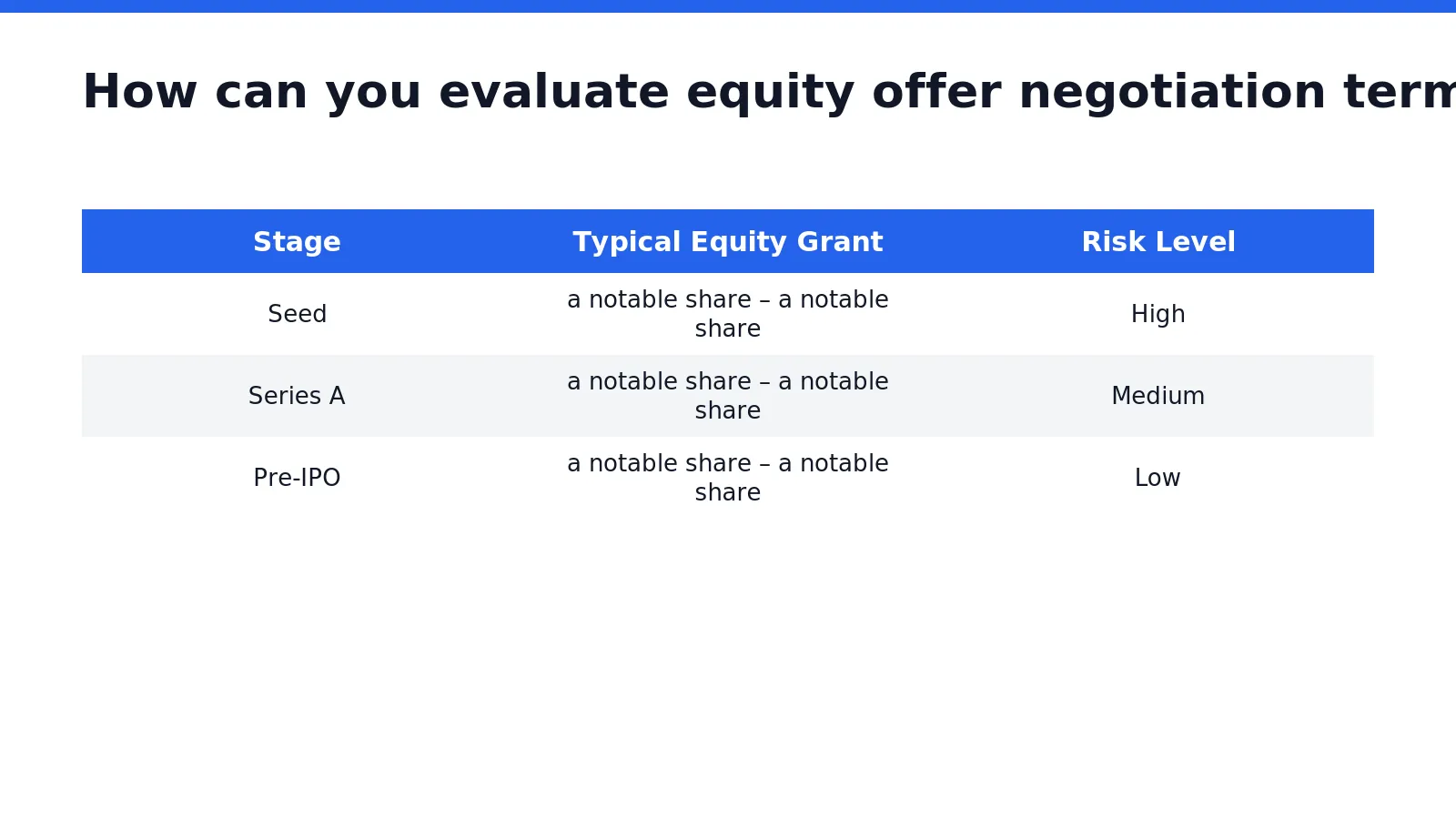
Seed-stage startups tend to run tighter on cash but make up for it with larger equity grants. Series A companies often land somewhere in the middle, with moderate salaries and meaningful equity upside. Pre-IPO startups usually flip that — higher base pay, smaller equity percentages. SuccessValley filters out the companies that aren’t worth your time, so you can focus on advancing your career in the kind of dynamic environment where compensation actually tracks growth potential.
How can you evaluate equity offer negotiation terms?
Evaluating an equity offer comes down to weighing immediate cash against long-term ownership in the company. SuccessValley connects candidates with seed-stage, Series A, and pre-IPO startups, and each stage comes with its own equity structure, payout timeline, and risk level. Get that balance wrong, and you could be leaving real value on the table.
What makes equity different from salary in a startup offer?
Salary is guaranteed, immediate income. Equity only becomes valuable if the company exits or hits a liquidity event. That’s the core tension in any salary negotiation at a startup: trading present cash for future upside. Candidates need to ask themselves whether the equity grant actually makes up for a below-market base salary, especially at earlier-stage companies where cash is tighter to begin with.
How do you compare equity across different startup stages?
Seed-stage startups usually offer bigger equity percentages, but the failure risk is higher too. Series A companies have more proof of product-market fit by then, which makes their equity easier to predict. Pre-IPO startups offer smaller equity slices, but with a much clearer path to liquidity. SuccessValley’s network of more than 5,000 recruiters gives candidates access to vetted opportunities across all three stages, so they can compare startup equity negotiation terms side by side.
| Stage | Typical Equity Grant | Risk Level | Liquidity Timeline |
|---|---|---|---|
| Seed | a notable share – a notable share | High | 5–10 years |
| Series A | a notable share – a notable share | Medium | 3–7 years |
| Pre-IPO | a notable share – a notable share | Low | 1–3 years |
What negotiation tips apply specifically to equity offers?
Good negotiation tips for equity start with understanding the company’s valuation, the option pool size, and the vesting schedule. Ask about the strike price, the number of fully diluted shares, and whether early exercise is on the table. These are the details that determine the real value of an equity offer negotiation and separate a meaningful grant from a symbolic one. SuccessValley’s platform lets candidates post their CVs and apply to thousands of startup listings, giving them leverage through multiple competing offers.
Conclusion
Mastering salary and equity negotiation turns your startup career from a gamble into a genuine strategic advantage. Know your market value, ask the right questions, and advocate for yourself, and you put yourself in a position to build real wealth alongside founders who share your vision. SuccessValley connects you with vetted startups where transparent compensation and meaningful equity actually align with your ambitions — so you can own your success from day one.
Frequently Asked Questions
What does a four-year vesting schedule with a one-year cliff mean?
A four-year vesting schedule with a one-year cliff is the standard structure for startup equity: no shares vest until you’ve completed a full year at the company, at which point roughly a quarter of your grant unlocks at once, with the rest vesting gradually over the remaining three years. Before accepting an offer, confirm this timeline in writing, along with acceleration terms spelling out what happens to unvested shares if the company is acquired or doesn’t make it. Getting these details early protects the equity you’re technically earning as you work toward it.
How do stock options compare to base salary when evaluating a startup offer?
Stock options and base salary represent two very different kinds of value. Base salary is guaranteed, immediate income you can count on regardless of how the company performs. Stock options only become valuable if the startup exits or reaches a liquidity event — until then, they’re a bet on the company’s future. Evaluating a startup offer means weighing that trade-off deliberately: a candidate confident in where a company is headed might accept a smaller base for a bigger equity stake, but should recognize the options are worth nothing if the startup doesn’t succeed.
What should you ask for before negotiating a startup’s equity offer?
Before negotiating or accepting equity, ask for the cap table, the option pool size, the fully diluted share count, and the strike price. These four details reveal how much of the company you’d actually own, how much dilution to expect as future funding rounds happen, and what it would cost to exercise your options. Skipping this step means negotiating blind — an equity percentage means little without understanding the total share count and how it could shrink over time as the company raises more money.
How much equity should you expect at a seed-stage startup versus a pre-IPO company?
Equity size and risk shift significantly by company stage. Seed-stage startups typically offer the largest equity grants because the company carries the most risk and the longest runway to any liquidity event, often five to ten years. Series A companies offer more moderate, balanced packages with a three-to-seven-year liquidity timeline. Pre-IPO startups flip the formula: smaller equity percentages, higher base salaries, lower risk, and a liquidity timeline of just one to three years. Matching your risk tolerance to company stage is central to evaluating any startup offer.
Why does the vesting schedule matter more than the number of shares you’re offered?
A large number of shares means little if the vesting schedule works against you. What matters is how and when those shares actually become yours, confirmed in writing, including the standard cliff and any acceleration provisions. Acceleration terms determine whether you keep your unvested equity if the company is acquired or doesn’t survive, protecting the value you’ve earned rather than just the raw count. Candidates who focus only on share count and skip these terms risk negotiating a number that looks good on paper but delivers far less in practice.
How does SuccessValley help candidates negotiate startup salary and equity?
SuccessValley connects candidates directly with founders at seed-stage, Series A, and pre-IPO companies, vetting each opportunity and pushing for equitable compensation before candidates ever see an offer. Backed by a network of more than 5,000 trusted recruiters, the platform lets candidates post their CVs and apply to thousands of startup listings, creating leverage through multiple competing offers rather than negotiating alone. That groundwork means professionals walk into salary and equity conversations already informed, comparing real opportunities across stages instead of guessing at a single company’s numbers.
What does a founder’s response to a counteroffer reveal about a startup?
How a founder handles a counteroffer previews how the company operates day to day. A founder who responds with transparency and speed signals a culture where decisions move quickly and leadership communicates openly, exactly the kind of environment worth joining. A founder who treats negotiation like a battle is showing that same instinct will likely carry into how raises, promotions, and disagreements get handled later. Paying attention to this signal during salary negotiation helps candidates steer clear of teams where compensation conversations turn adversarial.

Author: Kwaku Amenorhu
Kwaku Amenorhu is a Ghanaian entrepreneur, author, digital marketer, and founder of SuccessValley. His work focuses on entrepreneurship, digital innovation, career development, and helping aspiring professionals and business owners identify opportunities for growth.
Leave a Reply