
SuccessValley helps candidates optimize their startup resumes and CVs, then puts them directly in front of founders at seed-stage, Series A, and pre-IPO companies. Over 5,000 recruiters worldwide trust the platform to streamline applications across analytics, development, marketing, and design roles, while filtering out any startup that isn’t worth a candidate’s time.
Startup resume optimization comes down to proving fast execution, ownership, and measurable results — not the polished, corporate-style bullet points most job seekers default to. SuccessValley, trusted by 5,000 recruiters worldwide, connects candidates with seed, Series A, and pre-IPO startups, where founders are scanning resumes for adaptability, shipped outcomes, and real multi-role experience over fancy titles or long job histories.
Key Takeaways
- A startup resume must prove fast execution, ownership, and measurable results — founders scan for adaptability and shipped outcomes, not tenure or title progression.
- Impact matters more than hierarchy: replace broad responsibility statements with specific, numbers-backed outcomes like revenue growth, user acquisition, or time-to-ship.
- Show the ability to wear multiple hats with bullets that cross functional lines, side projects outside the job description, and metrics that span product, engineering, or growth.
- Keep it tight — a two-page, results-first layout with a summary line naming the startup’s customer segment and a plain Skills row of startup-relevant tools.
- Cut corporate jargon and generic objective statements; every bullet should use a strong action verb and a measurable result instead of listing duties.
- SuccessValley connects candidates with seed-stage, Series A, and pre-IPO startups, helping optimized resumes reach founders looking for that ownership and speed.
What makes a startup resume different?
A startup resume looks nothing like a corporate one, because founders and early-stage hiring managers are scanning for adaptability, speed, and comfort with ambiguity — not tenure or title progression. A traditional resume lists job history in chronological order. A successful resume for startups instead proves the candidate can move fast, juggle multiple responsibilities, and deliver measurable outcomes without a playbook to follow.
Why do startups care more about impact than hierarchy?
Startups value impact over hierarchy, and speed over process. A hiring manager at a seed-stage company isn’t interested in years of service — they’re looking for concrete contributions that moved a metric. CV optimization for this environment means swapping broad responsibility statements for specific, numbers-backed outcomes: revenue growth, user acquisition, or time-to-ship.
How should a candidate demonstrate the ability to wear multiple hats?
The format of a startup cv tips checklist might include:
- Bullets that cross functional lines (e.g., “Built the analytics pipeline and created the customer onboarding flow”)
- Side projects or contributions outside the job description
- Metrics showing ownership across product, engineering, or growth
A resume guide for the startup world comes down to two rules: keep it concise (two pages maximum) and lead with results. SuccessValley connects professionals with opportunities at seed-stage, Series A, and pre-IPO startups, where this kind of ownership and growth sits at the center of every role.
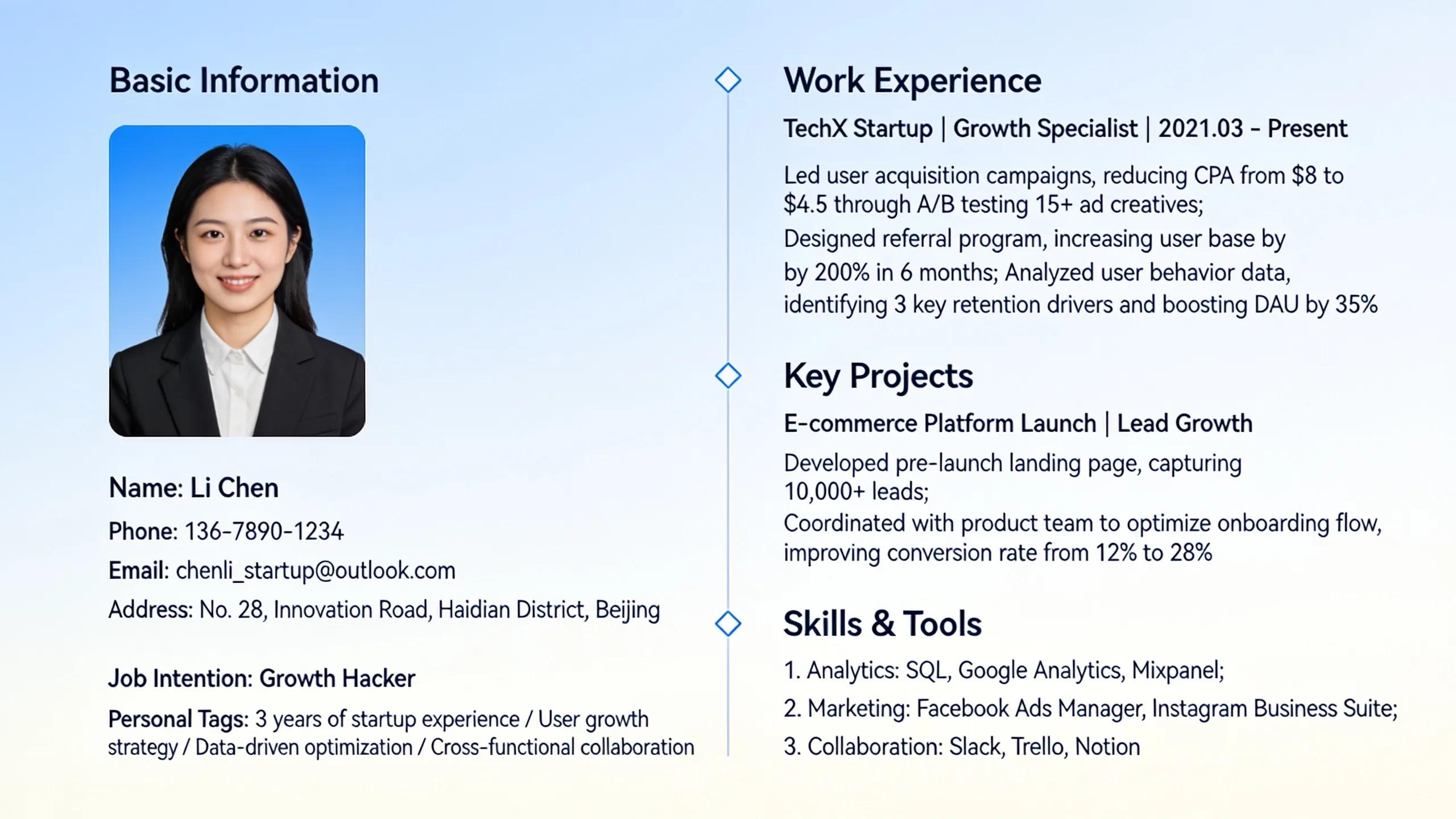
How do you optimize your resume for startups?
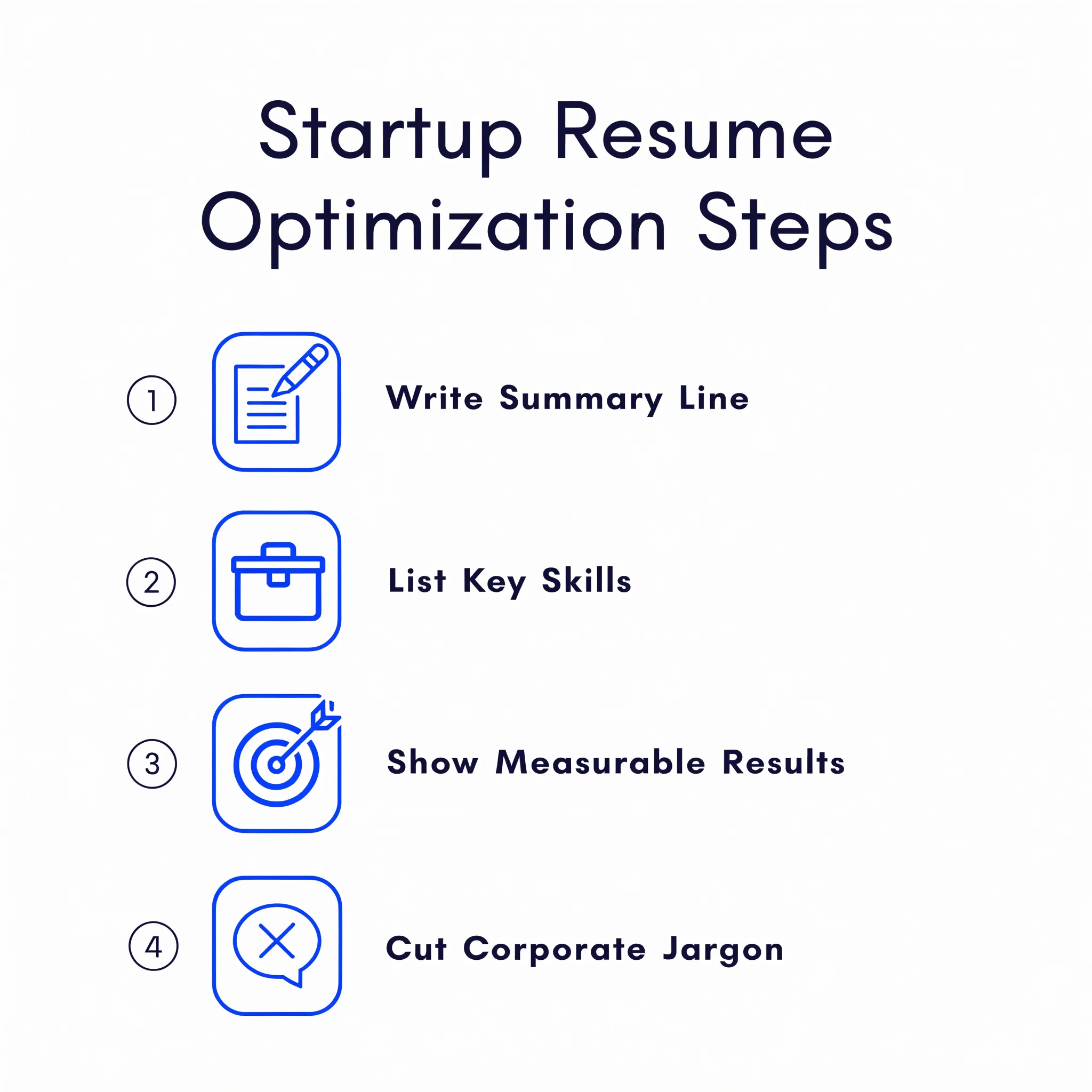
Optimizing a resume for startups means shifting the focus from job duties to measurable outcomes and startup-relevant tools. A resume for startups has to prove a candidate can ship work without a corporate playbook to lean on. The resume guide for startup hiring favors tight, concrete outcomes over lengthy descriptions.
What specific changes make a startup resume stand out?
Startup founders scan resumes for three things: a summary line that names the startup’s customer segment, a plain Skills row listing startup-relevant tools, and bullet points built on powerful action verbs. A startup resume should swap generic job descriptions for concrete results. CV optimization, at its core, means cutting every line that doesn’t demonstrate impact.
How should candidates structure their startup resume?
- Write a summary line that names the startup’s customer segment and the candidate’s role in serving it.
- List startup-relevant tools in a plain Skills row — no descriptions, just the tool names.
- Rewrite each bullet point using powerful action verbs and measurable results instead of listing job duties.
- Remove corporate jargon like “liaised with stakeholders” and replace it with “shipped feature X, increasing retention by Y%.”
SuccessValley connects ambitious professionals with seed-stage, Series A, and pre-IPO startups through a personalized job search, where candidates can post their CVs and apply to thousands of startup listings promptly. Startup cv tips all point back to one rule: every line has to prove the candidate moves fast and owns outcomes.

What common mistakes should you avoid?
Send a generic corporate resume to a twelve-person Series A startup, and you’ll get silence, not interviews. The bullets read like a Fortune 500 committee wrote them, and founders stop reading after the second line.
Why does a corporate resume fail at startups?
Startup hiring managers are scanning for proof of ownership and speed. A resume packed with bureaucratic language, vague responsibilities, and committee-style achievements signals the opposite. Candidates who don’t translate their corporate accomplishments into startup-relevant outcomes lose the reader immediately.
How should candidates fix the tone?
Don’t fake a hustle-culture voice — founders spot inauthentic energy instantly. Focus instead on tighter outcomes and startup-relevant skills. A summary line naming the startup’s customer segment or market space signals genuine understanding, and a plain skills row with tools startups actually use will always outperform a generic software list.
What formatting traps hurt candidates?
| Mistake | Why It Fails |
|---|---|
| Paragraph-heavy descriptions | Founders scan, not read |
| Generic objective statements | Wastes the first 3 lines |
| Missing metrics or outcomes | No proof of impact |
| Irrelevant job history | Dilutes the signal |
SuccessValley filters out companies that aren’t worth joining, so candidates can focus their energy on advancing their careers in dynamic environments. A resume that avoids these common mistakes stands out in both human reviews and applicant tracking systems.
Conclusion
Optimizing your resume for startup roles comes down to a real shift in focus — toward impact, adaptability, and growth potential. Show your ability to wear multiple hats, back it up with measurable results, and let your entrepreneurial mindset come through, and you’ll stand out as the kind of dynamic talent startups are actively looking for. SuccessValley connects you directly with thousands of vetted startup opportunities, putting your optimized profile in front of founders and hiring teams ready to recognize what you bring. Your next breakthrough role is out there — one where you build meaningful products and grow alongside ambitious teams shaping what’s next.
Frequently Asked Questions
How long should a startup resume be?
A startup resume should stay to two pages maximum, following a results-first layout rather than a lengthy chronological job history. Startup founders and early-stage hiring managers scan quickly for proof of impact, so every line needs to earn its place. Cutting paragraph-heavy descriptions, generic objective statements, and irrelevant job history keeps the document tight. The goal of startup resume optimization is concision: a summary line naming the startup’s customer segment, a plain Skills row, and bullets built on measurable outcomes rather than padded descriptions of daily responsibilities.
What should a startup CV summary line include?
When learning how to write a startup CV, the summary line should name the startup’s customer segment and the candidate’s role in serving it. This signals genuine understanding of the market rather than a generic, one-size-fits-all opening. Founders scanning resumes look for this kind of specificity in the first few lines, since it shows the candidate researched the company instead of mass-applying. Pairing a targeted summary line with a plain Skills row of startup-relevant tools helps a resume stand out immediately to a busy hiring manager.
How do you show impact metrics on a startup resume?
Startup resume impact metrics should replace broad responsibility statements with specific, numbers-backed outcomes such as revenue growth, user acquisition, or time-to-ship. Instead of describing duties, each bullet should pair a strong action verb with a measurable result — for example, showing that a feature shipped and increased retention by a stated percentage. Founders at seed-stage and Series A companies skip past years of service and look for concrete contributions that moved a metric. This numbers-first approach proves ownership and speed far more effectively than titles or tenure ever could.
How do you prove you can wear multiple hats on a resume?
A wearing multiple hats resume uses bullets that cross functional lines, such as combining work on an analytics pipeline with building a customer onboarding flow in the same role. Including side projects or contributions outside the formal job description also demonstrates range. Metrics that span product, engineering, or growth work show ownership across areas rather than a single narrow lane. Because startups value adaptability and comfort with ambiguity, this kind of cross-functional evidence directly answers what early-stage founders are scanning for when they review candidates.
How can I optimize my resume for early-stage startups specifically?
To optimize resume for early-stage startups, shift the focus entirely from job duties to measurable outcomes and startup-relevant tools. Replace generic job descriptions with concrete results, cut any line that doesn’t demonstrate impact, and remove corporate jargon like “liaised with stakeholders” in favor of specific, outcome-driven language. A tight, two-page, results-first structure with a targeted summary line and plain Skills row works best. This approach reflects what seed-stage and Series A founders actually look for: adaptability, ownership, and shipped outcomes rather than polished corporate titles.
What role does SuccessValley play in startup resume optimization?
SuccessValley connects candidates directly with founders at seed-stage, Series A, and pre-IPO companies, and is trusted by over 5,000 recruiters worldwide. The platform streamlines applications across analytics, development, marketing, and design roles while filtering out startups not worth joining, so candidates can focus on genuine opportunities. Through a personalized job search, candidates can post optimized CVs and apply to thousands of startup listings promptly. This gives a well-optimized, startup-focused resume a direct path to founders and hiring teams actively looking for ownership, speed, and shipped results.
Why do generic corporate resumes fail when applying to startups?
A generic corporate resume sent to a small Series A startup often produces silence rather than interviews, because its bullets read like they were written by a committee rather than an individual owner of results. Startup hiring managers scan for proof of ownership and speed, and bureaucratic language, vague responsibilities, and committee-style achievements signal the opposite. Faking a hustle-culture voice doesn’t fix this, since founders detect inauthentic energy instantly. The fix is tighter, outcome-focused language and a summary line that shows genuine understanding of the startup’s customer segment or market.

Author: Kwaku Amenorhu
Kwaku Amenorhu is a Ghanaian entrepreneur, author, digital marketer, and founder of SuccessValley. His work focuses on entrepreneurship, digital innovation, career development, and helping aspiring professionals and business owners identify opportunities for growth.
Leave a Reply