
Before signing an offer letter, clarity on compensation matters more than almost anything else. San Francisco Bay Area software engineers, for example, reportedly command salaries that vary widely by package, with equity structures often landing near 0.1–0.2%. SuccessValley equips aspiring founders with the mentorship and resources to negotiate offers with confidence and build careers on solid footing.
Startup salary structures vary widely by role, stage, and location, so no single number tells the whole story. The staff product manager data referenced throughout this guide comes from Startup Salary & Equity Compensation 2026, not from SuccessValley’s own compensation benchmarks.
Key Takeaways
- Early-stage startup salaries typically fall below market rate, with the gap offset by equity, flexible roles, and faster career growth.
- Equity vs. salary tradeoffs come down to certainty and timing: cash is guaranteed and immediate, while equity is contingent on company success and often years from liquidity.
- Startup compensation benchmarks swing widely by role, seniority, funding stage, and geography, so a single salary figure rarely tells the full story.
- Later-stage companies tend to favor cash compensation, while earlier-stage companies lean on larger equity grants often tied to a vesting schedule with a 4-year cliff.
- Assessing an offer means weighing role and seniority, funding stage, cash-to-equity ratio, and geographic market together, not salary alone.
- Mentorship and founder networks give candidates and employers the outside perspective needed to judge whether a below-market offer is reasonable.
What Should You Expect From an Early-Stage Startup Salary?
Compared to established companies, most early-stage offers simply pay less. A Guide to Startup Salaries & Compensation reports that working for a startup almost always means taking a salary cut relative to market rate. In exchange, founders and early hires trade some of that cash for other forms of value, including ownership stakes and faster career growth. Understanding this trade-off is the foundation of any sound startup salary guide.
Cash alone rarely tells the full story at a young company. Budgets are tight, runway is finite, and every dollar of salary competes directly with hiring, product development, and growth spending. Candidates evaluating an early stage startup salary need to weigh base pay against the company’s stage, funding position, and long-term potential.
Why Do Startups Pay Below Market Rate?
In their early years, startups operate with limited cash reserves and unpredictable revenue. Paying full market salaries would drain runway faster than most founders can afford, so companies offset the gap through equity, flexible roles, and faster career growth than larger firms typically offer.
Judging whether a below-market offer makes sense takes outside perspective. SuccessValley gives members access to startup resources and educational materials that help them weigh whether a given offer is reasonable, along with expert mentorship from experienced founders and business leaders who have negotiated similar offers themselves, adding real-world judgment to the numbers on the page.
How Do Equity Vs Salary Startup Tradeoffs Actually Work?
Equity vs salary startup tradeoffs come down to one exchange: lower guaranteed cash for a stake in the company’s future value. Early-stage employees typically accept the reduced pay because that ownership is meant to make up for the lost wages over time, according to The Founders Network. The bet only pays off if the company grows and eventually delivers a liquidity event.
At many young companies, compensation decisions aren’t built on formal frameworks at all. Ravio’s compensation guide notes that early salary offers often come down to a founder’s gut instinct rather than documented pay bands, especially when cash is tight. That informality is exactly why independent research matters before signing an offer letter.
Is Equity Worth More Than a Higher Salary?
There’s no universal answer here — it depends entirely on how the company turns out. A strong offer balances near-term financial stability against long-term upside.
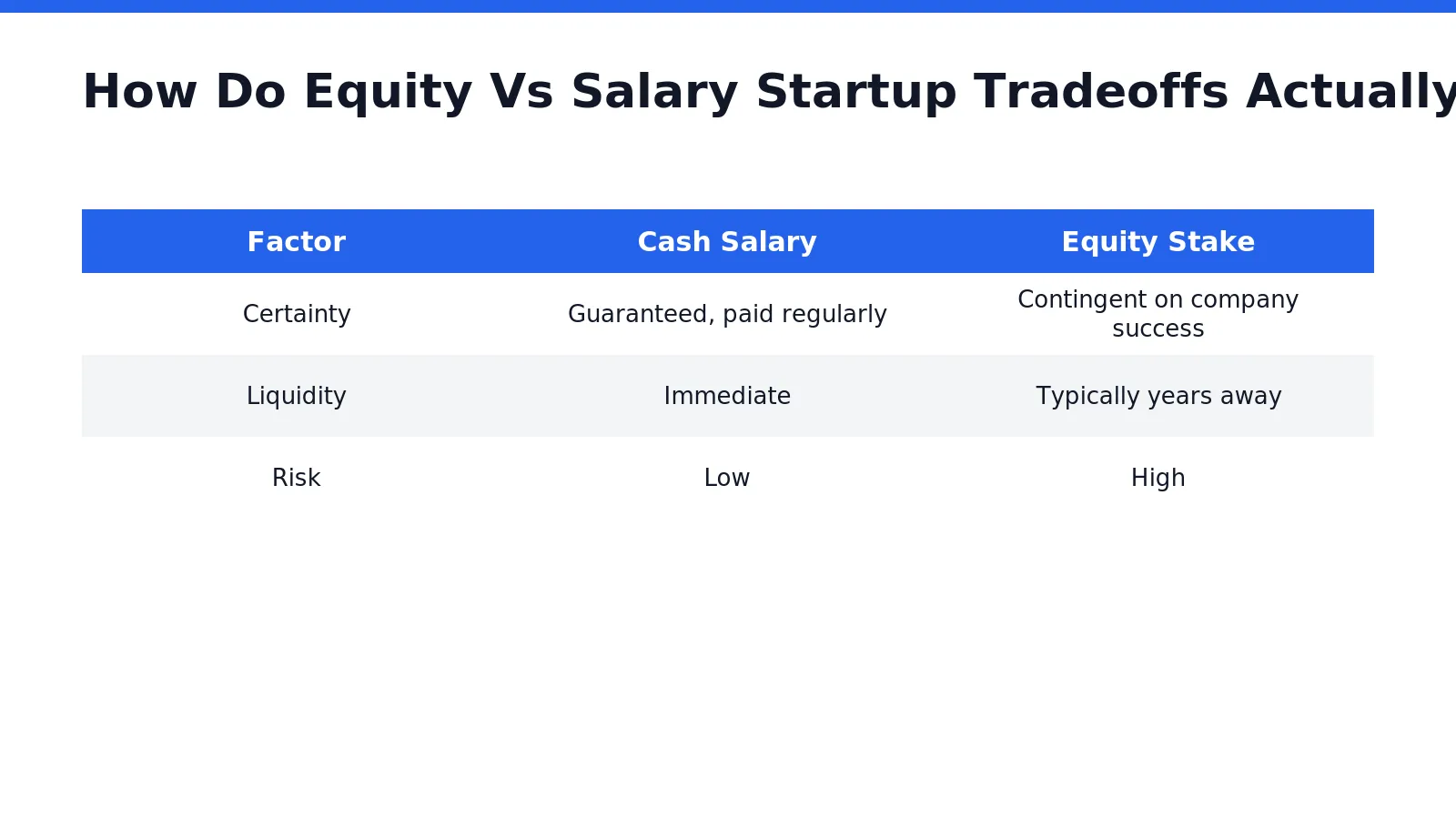
| Factor | Cash Salary | Equity Stake |
|---|---|---|
| Certainty | Guaranteed, paid regularly | Contingent on company success |
| Liquidity | Immediate | Typically years away |
| Risk | Low | High |
SuccessValley’s networking platform gives entrepreneurs a place to exchange ideas and compare offers across industries and countries, helping members benchmark terms before they negotiate. The community exists to help members think strategically about startup equity compensation, weighing risk against reward before accepting any role.

What Do Startup Compensation Benchmarks Reveal By Role And Stage?
Startup compensation benchmarks reveal sharp pay swings by role, seniority level, and funding stage. A senior product marketing manager at a later-stage company in the San Francisco Bay Area, for instance, may see a materially different pay and equity mix than one at an early-stage company, per Startup Salary & Equity Compensation 2026 data — worlds apart from a typical seed-stage offer. Without that context, founders risk setting an early stage startup salary too low to attract talent, or too rich to protect runway.
Why does pay structure shift so much between funding stages?
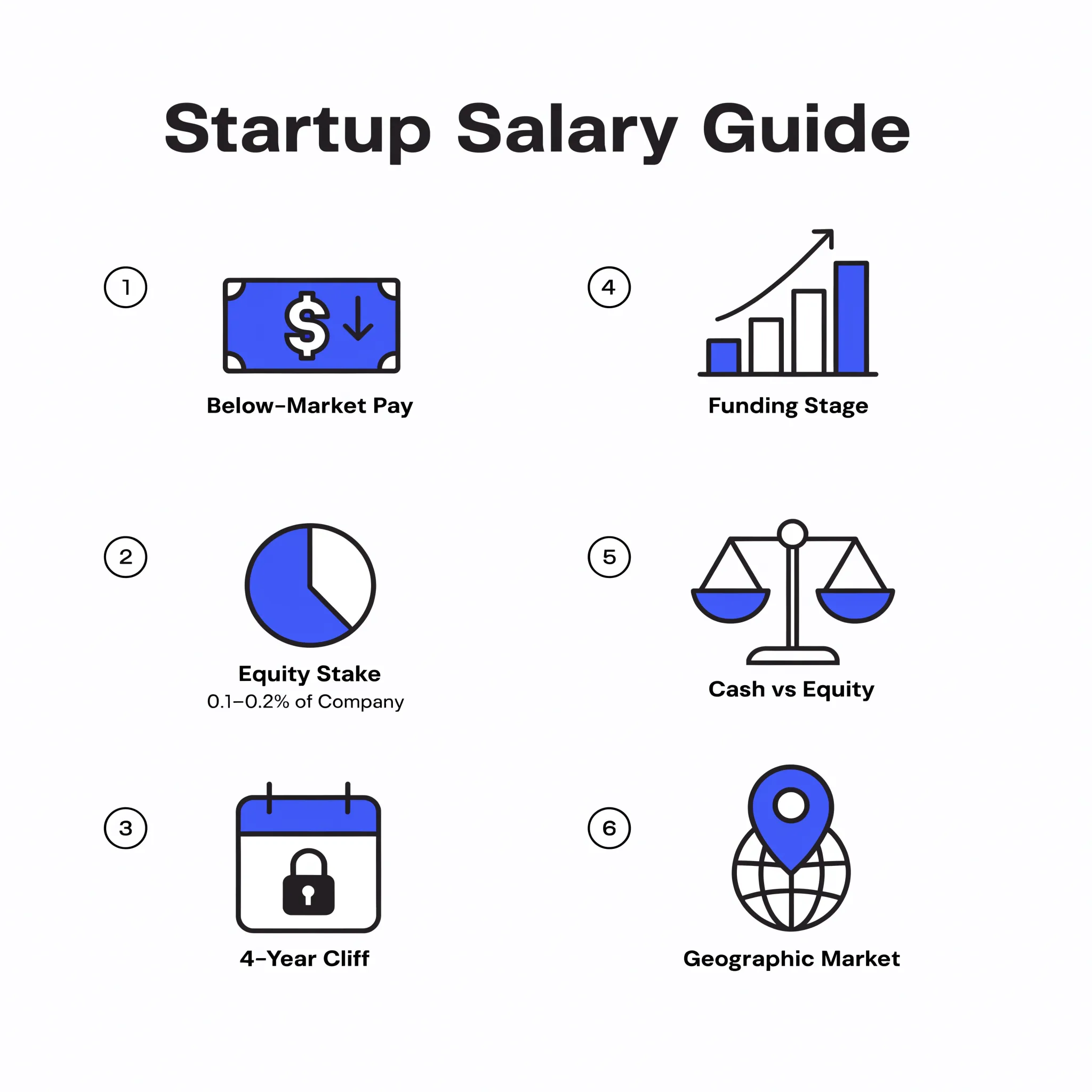
Later-stage firms carry lower risk, so they lean on cash rather than stretching the equity vs salary startup tradeoff. Earlier-stage companies do the opposite, offsetting thinner paychecks with larger equity grants tied to a vesting schedule 4 year cliff that rewards employees who stick around through the growth curve. In short, compensation tracks company maturity.
Reading a startup compensation benchmarks table takes more than pulling one number. A useful comparison typically weighs:
- Role and seniority against market median pay
- Funding stage and company headcount
- Cash-to-equity ratio, not salary alone
- Geographic market versus remote-adjusted rates
Founders and early employees rarely make sense of these variables alone, and aspiring entrepreneurs often lack access to mentors who can give honest feedback on pay and equity. SuccessValley connects members with a global network of founders, entrepreneurs, investors, and business leaders who have negotiated these exact tradeoffs, and pairs that network with structured courses in entrepreneurship and business strategy — giving members a working foundation before they build or accept a startup salary guide of their own.
Conclusion
Understanding startup salary structures is a critical piece of building sustainable, competitive organizations. SuccessValley equips entrepreneurs and business leaders with the knowledge and community resources they need to navigate compensation strategy with confidence. Through mentorship, educational resources, and peer collaboration within the platform, members gain the strategic perspective required to attract and retain top talent while staying financially viable. With those insights and SuccessValley’s broader ecosystem behind them, founders can position their ventures for long-term success.

Author: Kwaku Amenorhu
Kwaku Amenorhu is a Ghanaian entrepreneur, author, digital marketer, and founder of SuccessValley. His work focuses on entrepreneurship, digital innovation, career development, and helping aspiring professionals and business owners identify opportunities for growth.
Leave a Reply