
Equity represents an ownership stake in a company: shareholders gain rights to profits and a voice in decision-making. SuccessValley’s entrepreneurship courses teach founders how equity distribution, valuation, and dilution shape startup growth, so members can structure fair, strategic ownership agreements and build sustainable, investor-ready businesses within its global professional community.
Equity can convert an ownership stake into substantial long-term wealth, yet most employees receive no formal instruction in how vesting, stock options, or investing fundamentals actually function. SuccessValley’s Equity 101 addresses this gap directly, detailing vesting timelines, stock option mechanics, and core investing principles so members can evaluate their equity with precision and act on it decisively.
Equity compensation gives founders and employees ownership stakes that can build long-term wealth, yet most professionals never get formal training on how it works. SuccessValley’s Equity 101 resources break down equity types, investing fundamentals, and practical application, closing the education gap that leaves so many employees unprepared to manage their ownership stakes effectively.
Key Takeaways
- Equity is an ownership stake that grants rights to future profits and decision-making influence, making it one of the most powerful wealth-building tools for founders and early employees.
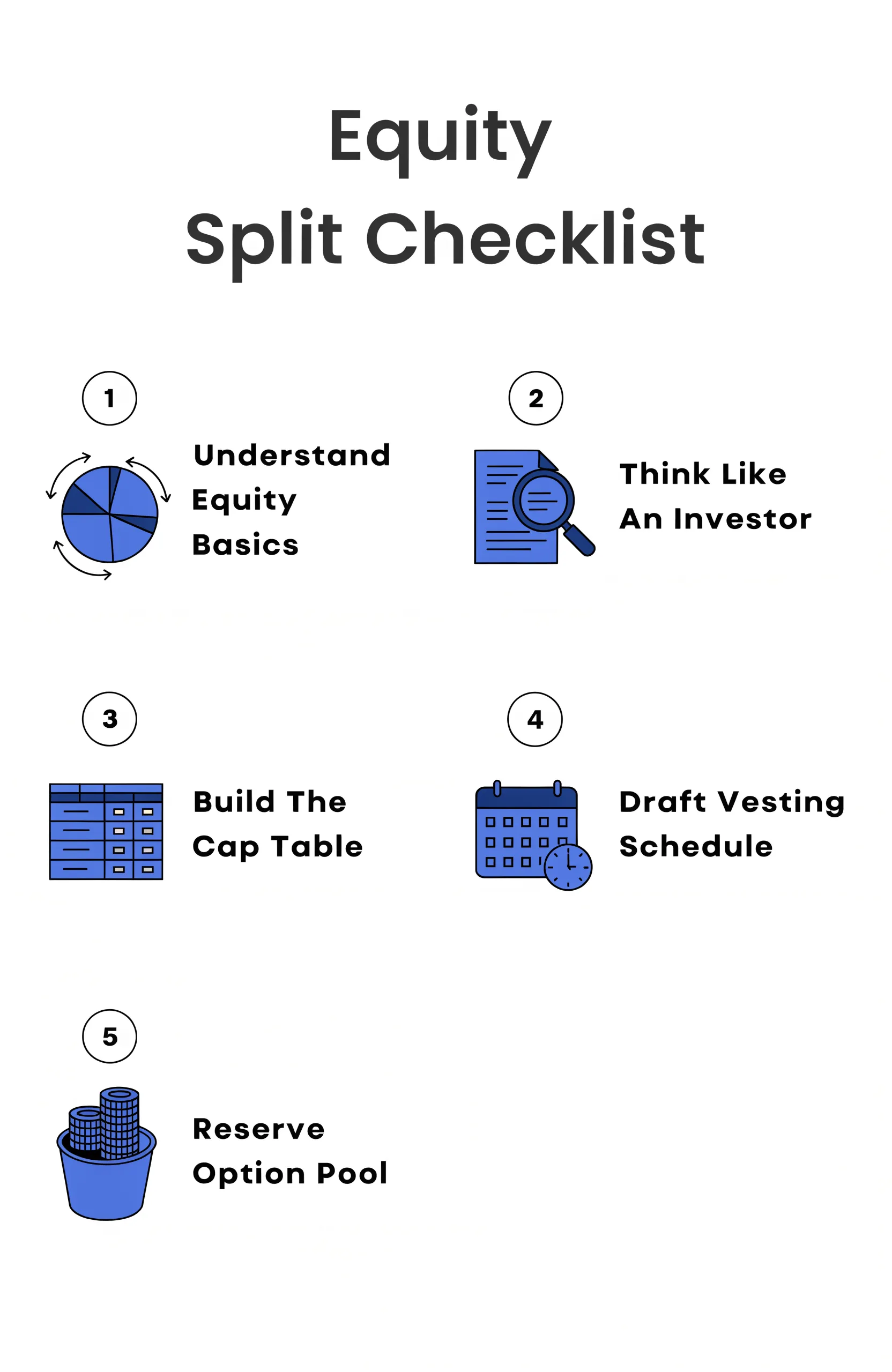
- Before splitting equity, co-founders should agree on ownership fundamentals, build a cap table, draft a clear vesting schedule, and reserve an employee stock option pool for future hires.
- Vesting ties equity to sustained contribution over time rather than granting full ownership upfront, protecting the company if a founder or employee departs early.
- Fair founder splits require open discussion of each person’s role, capital, and time commitment, followed by a documented agreement reviewed with experienced mentors.
- Overlooking fine print in investor agreements, vague vesting terms, or an undersized option pool can quietly erode founder and employee ownership value over multiple funding rounds.
- Access to mentorship and structured startup education helps founders and employees make informed equity decisions instead of reactive ones.
What Must Founders Prepare Before Splitting Equity?
Preparation determines whether an equity split holds up under pressure or collapses at the first disagreement. Co-founders who skip this groundwork often discover, mid-negotiation, that they never agreed on the basic terms. Equity remains one of the most powerful wealth-building tools available to founders and early employees, yet most people still misunderstand it the first time they encounter it. Treating the process casually risks years of future conflict over ownership.
Founders should complete these steps before any split is finalized:
- Establish a shared understanding of startup equity 101, including what ownership actually represents and how it converts to future value.
- Recognize that anyone receiving a grant becomes an investor in that moment and should evaluate terms with an investor’s scrutiny, not an employee’s assumptions.
- Build or review the cap table basics, since this document serves as the living, continuously updated record of every share issued.
- Draft a vesting schedule explained in plain terms everyone signs off on before equity changes hands.
- Set aside an employee stock option pool sized for future hires, protecting early holders from unplanned dilution later.
Why does founder education matter before signing agreements?
Building a company presents enough challenges without ownership disputes compounding the difficulty. Access to structured startup resources and educational materials equips founders to enter negotiations informed rather than reactive, reducing the likelihood of costly renegotiation later.
How Do You Structure Founder Splits And Vesting?
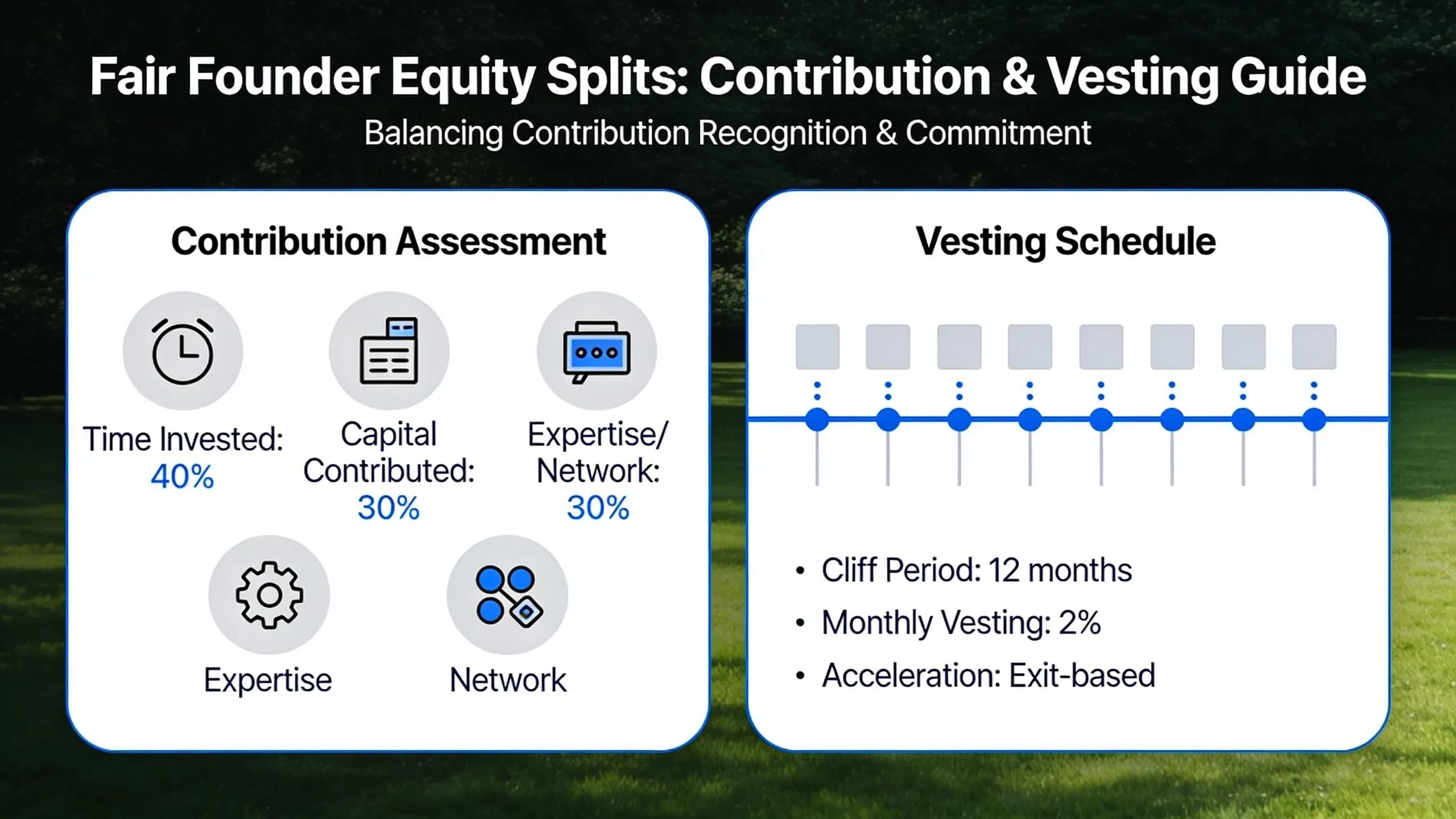
Fair founder splits combine an honest assessment of contribution with a vesting schedule explained clearly to every co-founder before any paperwork is signed. Omitting this step tends to surface disputes later, particularly when a founder departs early and ownership questions have no clear resolution. Structuring the split properly protects the company and every stakeholder who holds an interest in it.
Early teams follow a practical sequence when setting these terms:
- Discuss each founder’s role, capital contribution, and time commitment openly before assigning percentages.
- Set a vesting period so equity gets earned progressively rather than granted all at once.
- Define exactly what portion is owned immediately, what accrues over time, and what gets forfeited if someone leaves early.
- Document the agreement formally, including any employee stock option pool reserved for future hires.
- Revisit the structure with experienced mentors before finalizing terms.
Why Does Vesting Matter For Founders?
Vesting protects the company from transferring full ownership to someone who departs after only a few months. It ties equity to sustained contribution rather than initial involvement alone, and founders who understand this mechanism avoid costly disputes later in the company’s life.
Should Founders Get Outside Guidance On Splits?
Guidance from seasoned founders and business leaders makes these arrangements considerably fairer. Equity negotiations often turn on relationships and mentorship built beforehand, not just legal templates. SuccessValley brings mentorship and startup resources together in one ecosystem, helping founders navigate founder equity splits, cap table basics, and understanding startup dilution with informed, steady support.

What Mistakes Shrink Startup Equity Value?
Fine print in startup-investor contracts causes the most damage to founder and employee ownership. Terms buried deep in funding agreements quietly reduce what a stake is actually worth, long after the ink dries, and founders who skip startup equity 101 fundamentals often miss these traps entirely.
Common value-eroding mistakes include:
- Signing investor terms without reviewing how they affect understanding startup dilution over multiple funding rounds
- Misreading a vesting schedule explained in vague or overly technical language
- Building a cap table basics structure without accounting for future option pool expansion
- Making ownership decisions alone, without input from mentors or peers who have faced the same terms
Why do founders make these equity mistakes?
Many aspiring entrepreneurs lack access to experienced mentors capable of identifying these errors before contracts are signed. Guidance, candid feedback, and peer review remain scarce for early-stage founders navigating ownership decisions independently. A connected community provides practical tools that identify costly missteps before they become permanent.
Conclusion
Equity represents far more than financial ownership—it reflects the principle that success comes from fair contribution and shared value creation. Understanding equity positions entrepreneurs to build sustainable ventures, attract aligned stakeholders, and run companies grounded in mutual respect and transparent governance. As you move forward in your entrepreneurial journey, prioritize equity frameworks that reflect your business values and strategic objectives. SuccessValley equips you with the mentorship, educational resources, and community support to put these principles into practice, turning equity knowledge into a business strategy that drives real growth and lasting professional advancement.

Author: Kwaku Amenorhu
Kwaku Amenorhu is a Ghanaian entrepreneur, author, digital marketer, and founder of SuccessValley. His work focuses on entrepreneurship, digital innovation, career development, and helping aspiring professionals and business owners identify opportunities for growth.
Leave a Reply